Posts

Romantic Era Blog

Image
My blog will be comparing the Hudson River School style to that of the German Romantic Movement. The Hudson River School style lasted from roughly 1825-1890 before falling out of popularity, with the German Romantic Movement lasting from the late 1700's to the early 1800's. While the Hudson River School specifically focused on renditions of the vast, luscious American landscapes, the German Romantic Movement was more broad in what it covered. The German Romantic Movement focused on emotion and nature, trying to express the "German soul" through stoic and breathtaking paintings of scenes ranging from natural landscapes to impactful portraits.  The Hudson River School Cole, Thomas. The Oxbow . 1836, The Metropolitan Museum of Art, New York " The Oxbow" presents a grand scene brimming with vibrant green plant life and an expansive background featuring the Connecticut river. Cole, coming from Ohio, found great inspiration in his early 20's to paint grand pa...
Classical Blog Exhibit

Image
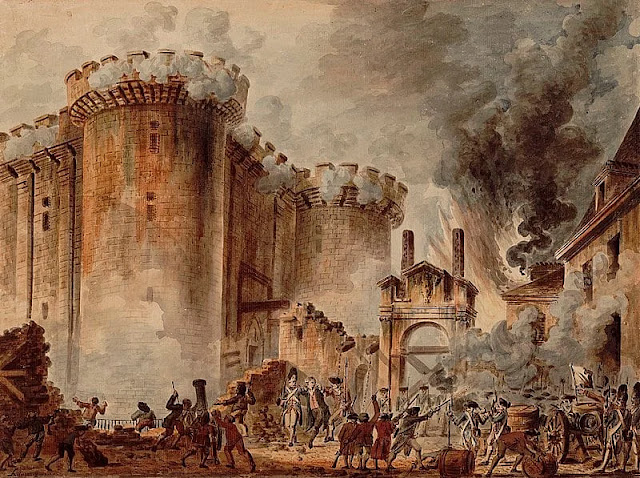
 To start, I have "The Storming of the Bastille"  (1789) by Jean-Pierre Houël. It is a painting made to depict the storming of the Bastille- a medieval fortress- by revolutionary insurgents. The importance of the insurgents taking the Bastille cannot be understated, as it was a slap across the face of the French nobility. Commoners taking such a fortified stronghold gave them not just a strategic upper-hand, but it also solidified the idea of the nobility being at the mercy of the commoners. In terms of the art itself, there's something so striking about the juxtaposition of the fortified old bastion and the contemporary weapons and clothing such as the strikingly colored uniforms and the cannons and muskets. It's gritty and hazy, which conveys the mayhem that the battles created. All the while, it represents the hard-fought efforts of the revolution and the changes in the French power that came with it.  Moving aside from the revolution and war that "The Stormin...

Baroque Blog Assignment

Image
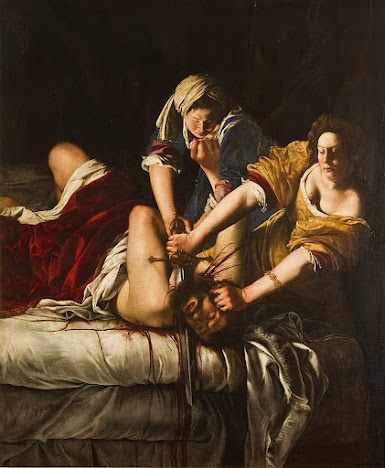
 In my last blog, I covered Caravaggio's "The Calling of Saint Matthew" . While I had included this in a post meant to cover paintings from the Renaissance, it is actually a baroque. In spite of making such an embarrassing mistake, I found a new appreciation for tenebrism. This is all to say that I was drawn to Artemisia Gentileschi's "Judith Slaying Holofernes"  from the moment I saw it. The painting shows clear tones of tenebrism and humanism, with historical and religious undertones that give the painting even more depth once you learn about it. The painting depicts Judith and her maid slaying and decapitating Holofernes, an Assyrian general. Holofernes, in his lust for the widowed Judith, allowed her into his tent, then got drunk. Originally planning to take advantage of Judith due to his power as a general, it's ironic that she was the one to kill him. Judith killed Holofernes as he was about to invade and raze the city of Bethulia, where Judith liv...

Renaissance Blog

Image
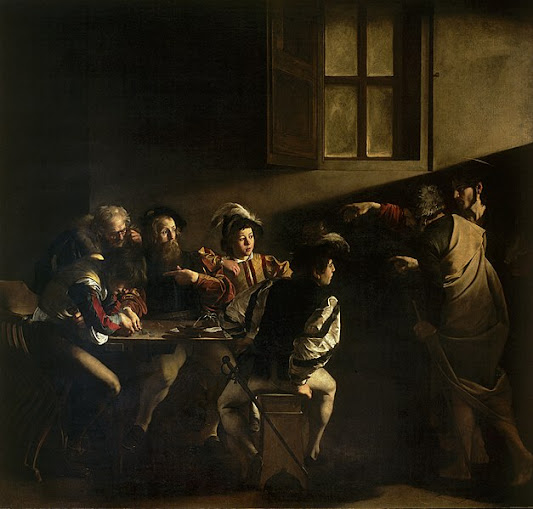
     In researching the Renaissance, I found out about the style tenebrism. Tenebrism heavily contrasts light and dark in the painting, thus focusing your attention on the figures depicted within. Tenebrism was developed during the late 16th century, with notable artist such as Georges de La Tour and Rembrandt adopting the style in their works of the time. Though they were notable artists, neither Rembrandt nor de La Tour were the ones who created the painting I'll be discussing today, though. The painting I'm referring to is "The Calling of Saint Matthew". Caravaggio. The Calling of Saint Matthew.  1599-1600. San Luigi dei Francesi, Rome.      This painting elicits a few emotions. Upon viewing it initially, I felt that the man at the left end of the table was being shamed, with the the man on the right judging him for something he'd done. Meanwhile, the other people at the table are surprised by such a choice. You can almost feel the sense of gui...

Art Analysis Blog

Image
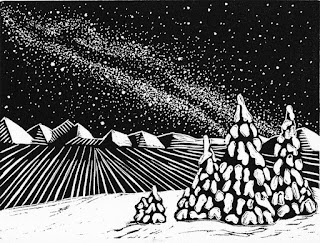
  Introduction Aside from visiting local art galleries with my family every once in a while, I'm not someone who seeks much art. To put it simply, I only really appreciate the art that is put right in front of me. This is exactly how I was exposed to Timling's art- my mom hung up her paintings all around the house. I've become used to seeing them around the house, so I often don't take the time to look at them and really appreciate the art for what it is. This assignment has allowed me to remedy that by taking a deeper look at her art.  Art Elements This painting- named  Starry Traverse - depicts "a six-hour 'snapshot' of traversing stars. However, the movement of the earth rather than the movement of the stars causes the traverse" (T imling). The most notable element of Timling's art is the color- specifically, the fact that this one is in black and white. I find it very impressive that she's able to add so much detail to the landscape using o...

Introduction

Image
Welcome to my blog! My name is Elliott Hinz, and I'm a second-year at UAF. While I've lived here in Fairbanks for a few years, I'm originally from the village of Fort Yukon. I'm majoring in business management, so I'm only doing this as a GER, but I hope to still enjoy the class. This is the first art class I'll have taken since elementary school, which I hope doesn't end up becoming an issue. Regardless, I hope to stay on top of this class and have a nice semester! Likewise, I hope everyone else doesn't end up feeling like this class is a drag or a repetitive "comment on 3 other peoples post's" class.  This is artwork done by an Alaskan artist, Ina Timling. I myself have never painted and wouldn't consider myself an artist, but I do enjoy going to art galleries. I especially appreciate local art, and my mom owns several of Timling's paintings, all of which I like. I really appreciate this painting in particular, as it reminds me a ...